
For those of us who live in colder climates or at higher altitudes, we know too much about snow. Each winter we find ourselves knee deep in white powder, and sometimes, back straining, heavy, wet snow. Would you believe us if we told you there is a way to retire your snow shovel and snowblower for good and eliminate the use of chemicals to help melt snow and ice? There is! And you even have a couple of options to choose from for your home or business.
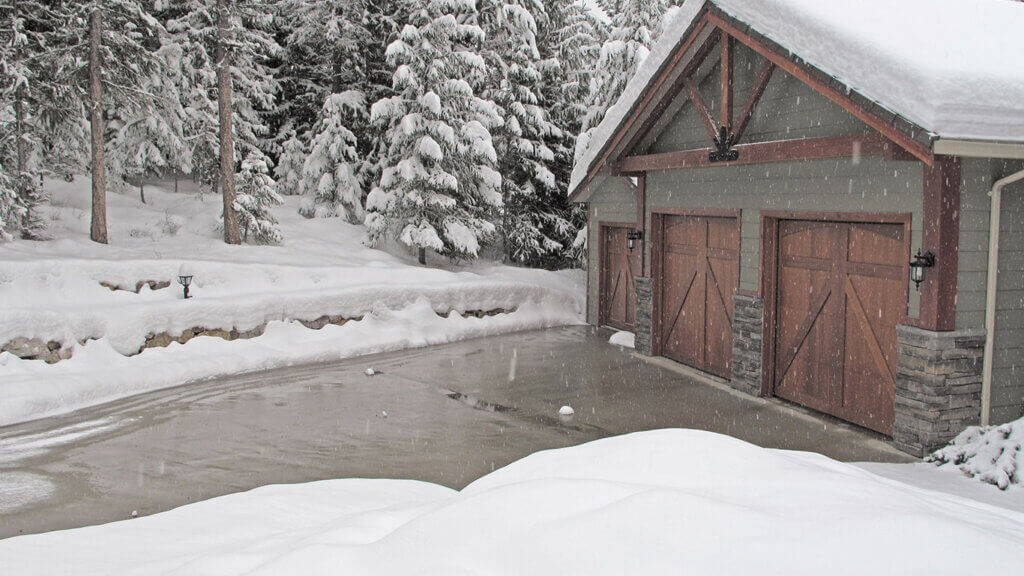
How Do Heated Driveways and Sidewalks Work?
Snow and ice melt systems are made up of snow melt cables or mats, controllers, sensors, and potentially other snow-melt accessories. Having all of these components as a part of your system is crucial to ensure your heating works properly and efficiently. Unlike many indoor radiant heating systems, snow and ice melt systems are not sold in complete kits, so all components must be purchased individually. The only exception to this is some mats that cover very small areas have sensors and controllers built in, but they hold much less amperage.
An electric heated driveway system wired to a controller with an automated sensor is designed to operate automatically. A controller with an automated sensor monitors moisture, temperature, and precipitation, and will turn on the system heating surface just above freezing when necessary. Believe it or not, there is even a controller that activates based on the weather forecast, so it can preheat the slab before the snowfall!
Manual controls are also available but are recommended mainly for heating outdoor spaces such as patios. They can be used for snow and ice melting but are much less efficient than systems using automatic sensors. The main feature of a manual system is the ability for the user to turn the heat on and off as they please and set the temperature at the thermostat.
Note: Activating your system manually after snow has fallen will greatly increase melting time and energy consumption, and it most likely won’t be able to keep up.
Snow Melting Mat vs. Cable Systems
Snow melting mats and snow melting cables are both designed to keep outdoor surfaces free of snow and ice, but they offer different advantages depending on the layout and requirements of your project.
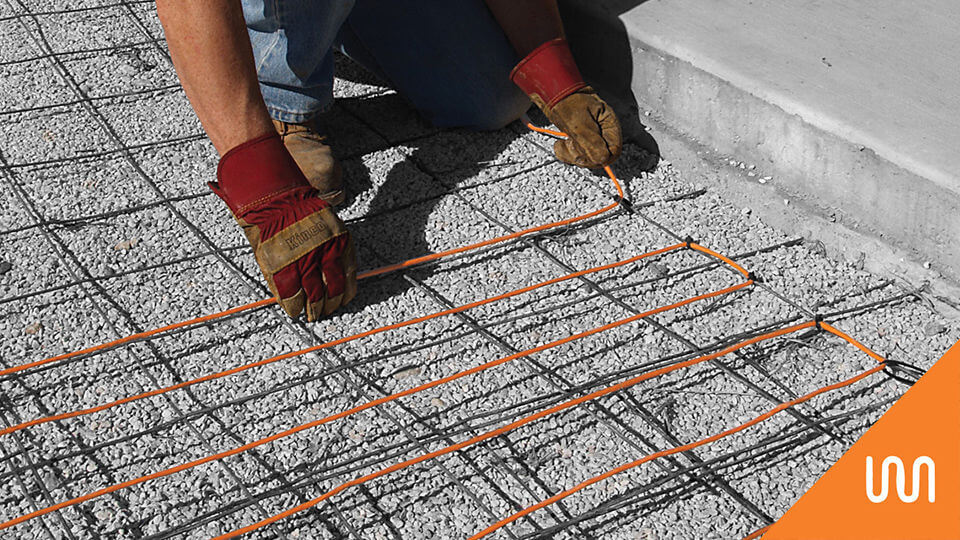
Snow melting mats are pre-spaced and attached to a mesh backing, making them quicker and easier to install in simple layouts, like driveways, sidewalks, and patios. Because the cable is already spaced in these systems, mats ensure consistent heat coverage and reduce installation time.
Snow melting cables are the more flexible options because the cable layout can be customized during installation. This makes cables better for curved driveways, irregular walkways, stairs, ramps, and other projects with irregular-shaped layouts. Cable systems typically require more planning and installation time, but they allow the heating area to be customized to the exact dimensions of the project.
What are the advantages of snow melting systems?
Snow melting systems offer safety and convenience over traditional methods of removing snow and ice. With electric radiant heat in your driveways and walkways, you can avoid labor-intensive shoveling, annual snowblower maintenance, or the cost of hiring someone else to plow your driveway or shovel your walk.
And because you won’t need deicing chemicals and salts, a system preserves the condition of your driveway and walkway surfaces – and landscaping, too.
Here are just some of the benefits of a snow melting system:
- Adds luxury and value to your home—A permanent snow removal system is an asset to your home
- Maintenance-free snow and ice melting—No moving parts that would require at least annual service
- Simple and efficient—High-quality system controls are available in a wide range of options for ultimate convenience
- Saves time and labor—Retire your shovel and eliminate the need for plow/removal labor
- Increases safety and reduces liability—Safer walkways mean reduced liability from slips and falls on your property, and safety for your family and guests (Read more about outdoor snow melting and safety)
- Environmentally friendlier than de-icing salts and chemicals—Preserve the condition of your driveway/walkway and landscaping and protect pets’ paws from harsh chemicals
- Automatic sensor options—Systems can automatically activate before snow hits the ground
Where Can You Install Snow Melting Systems?
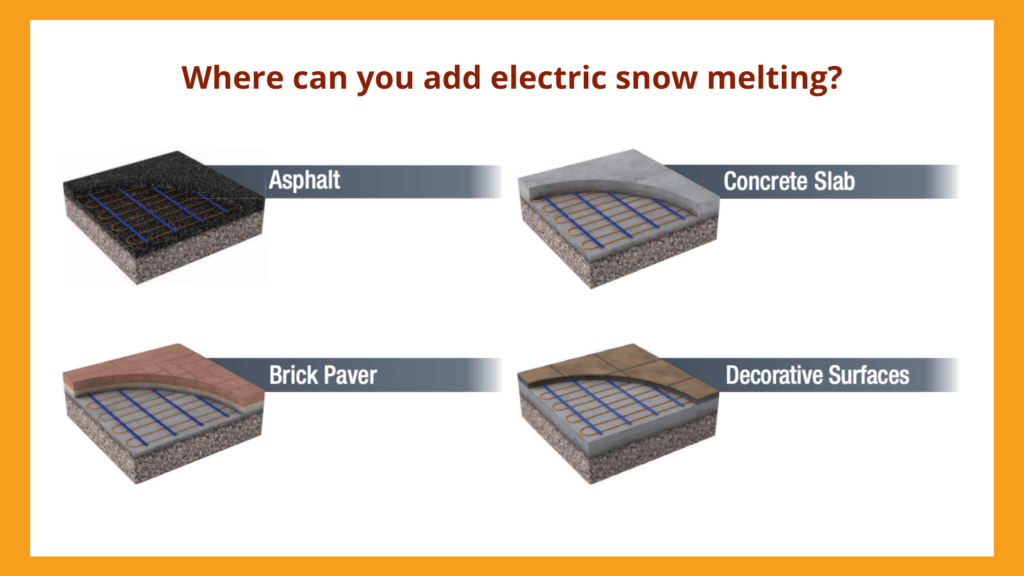
You can install snow melting systems under concrete, asphalt, pavers, and ceramic or tile stone. But depending on how big your property or budget is, you may want to install a system where it can have the most impact.
Consider installing a system in steep areas that are difficult to shovel or especially dangerous when ice freezes. Another place to consider is an area with heavy foot traffic. Coverage can follow a variety of patterns, with tire tracks being very popular as they reduce up-front costs and future operating costs, but are still very effective. And if slippery stairs are a concern, install mats for a few steps, and use cables for more stairs.
Do You Need to Heat the Entire Driveway?
What most people don’t know about snow melting systems is that the entire driveway or outdoor surface doesn’t need to be heated. Many homeowners choose to heat only the areas they use most often, which makes these systems more affordable.
A popular option is heating only tire tracks, which allows vehicles to safely enter and exit the driveway, but reduces the amount of heating required. Others choose to heat the primary walkway from the driveway to the front door, outdoor stairs, wheelchair ramps, or other areas where snow and ice are safety concerns.
Full driveway coverage provides the most snow melting benefits and is typically used for steep driveways, commercial properties, or homeowners who want completely clear pavement after every snowfall. The right option depends on your budget, property layout, and goals for your project.
Can Snow Melting Systems Be Installed Under Existing Driveways?
Yes, snow melting systems can be retrofitted into existing driveways, walkways, and patios. Because the heating mats or cables must be embedded beneath the finished surface, retrofitting requires removing the existing surface before the heating system can be installed and the surface rebuilt. For this reason, many homeowners choose to install a snow melting system when they are already replacing a driveway or walkway.
If you’re unsure whether retrofitting is the right option for your property, the Warm Your Floor team can review your project and help determine the best approach. Whether you’re planning a new installation or updating an existing space, we can help you find the best solution for your space.
What to Consider Before Installing Snow & Ice Melt Systems
While heated driveways offer comfort and convenience during the winter months, it’s important to consider a few things before installing.
Here are a few considerations to make before choosing a snow melting system:
- Initial installation costs—The complex nature of these systems means that installing them involves not just purchasing the necessary equipment, but also hiring skilled contractors
- Installation process—The process of installing a heated driveway can be complex and, in many cases, requires the existing driveway to be dug up and replaced. This is especially true if retrofitting is not viable due to the condition or type of the current driveway
- When to install—Snow melting systems must be installed in 40ºF or warmer because they’re installed beneath concrete, asphalt, or pavers that need to be cured. Summer and early fall are the best times to install them before winter weather arrives.
- Surface replacement or new construction — Snow melting systems are easiest to install during new construction or when replacing an existing driveway, sidewalk, or patio. Retrofit installations are possible in some situations but typically require removing and replacing the existing surface.

Watch a Warmup Snow Melting System in Action
Get started with Warm Your Floor
Warm Your Floor is an authorized dealer of snow and ice melting systems from trusted brands like ProMelt and Warmup. Purchasing your complete system from an authorized dealer is important to ensure you receive legitimate parts and a warranty for your system.
Love the idea of snow melting systems? Give us a call, and we’ll help you determine what system and products would be an efficient choice for your home or business.
Stay Warm and Informed
Stay one step ahead with expert articles, heating hacks, and product news delivered right to your inbox when you sign up for our newsletter.
Frequently Asked Questions
We understand that choosing and installing snow melting systems is a big investment. Here is some additional information to help you make an informed decision.
How do I know what size snow melting system I need?
The right system size depends on the area you want to heat, the surface material, climate, and whether you want full or partial coverage. Because every project is different, most systems are custom designed based on your specific layout. Contact the Warm Your Floor team if you need help determining how much area you need to cover.
How much do snow melting systems cost?
The cost of a snow melting system depends on the size of the heated area, the surface material, the type of heating, and the controls required for the system. Operating costs also vary depending on climate, electricity rates, system size, and how frequently the system runs. It’s also important to consider installation costs for contractors who will need to remove the surface and install the heating system.
Do snow melting systems turn on automatically?
Yes, snow and ice melting systems use automatic snow sensors and controllers that detect moisture and temperature to activate the heating system only when needed.
Are there different types of temperature sensors?
Yes, there are aerial mounted and ground mounted sensors. Aerial mounted sensors turn on automatically based on moisture and are used for basic snow and ice melt applications. Ground mounted sensors are the best option for driveways or walkways that have trouble spots with a lot of ice build-up. With the aerial mounted sensor, once the settings detect it’s no longer getting moisture or cold enough, it will shut off the system. Ground mounted sensors help with areas stuck in shade or that hold ice because the sensor gets mounted in the ground and will keep the system running until the ice is fully melted.
How long do snow melting systems last?
When properly installed, electric snow melting systems are designed to provide 20-30 years of reliable performance. Because the heating elements are embedded beneath the surface, they require very little maintenance.